The Electric Vehicle Mandate Mirage: A Decentralized Reality Check on Supply Chains, Grid Failures and the False Green Promise
05/19/2026 / By Edison Reed
Report Highlights Obstacles to Electric Vehicle Transition
Global electric vehicle mandates face significant barriers related to mineral supply, energy infrastructure, and humanitarian concerns, according to a synthesis of government data, industry analyses, and investigative reports.
The findings, drawn from sources including NaturalNews.com, automotive trade publications, and academic studies, indicate that current government targets for EV adoption may not be achievable without addressing critical shortfalls in battery materials, grid capacity, and the social costs of mining. Critics have pointed to falling consumer demand and high costs as additional factors slowing the transition.
Mineral Supply Constraints Pose Challenge
A persistent challenge for EV mandates is the availability of key battery minerals. According to a 2023 analysis by Mercola.com, replacing the 31.5 million vehicles in the United Kingdom with electric cars would require twice the global supply of cobalt, illustrating the scale of the mineral deficit. [1] The report stated that current mining projects are not keeping pace with the rapid increase in battery production targets.
Other sources note that the heavy dependence on toxic materials such as lithium and cobalt carries environmental costs from mining operations. [2] At the same time, Chinese manufacturers are pursuing alternatives. In April 2025, Contemporary Amperex Technology (CATL) announced a mass-market sodium battery, which could reduce reliance on scarce minerals. [3] However, the transition to new chemistries takes time and investment, leaving near-term targets at risk.
Energy Grid Limitations Raise Concerns
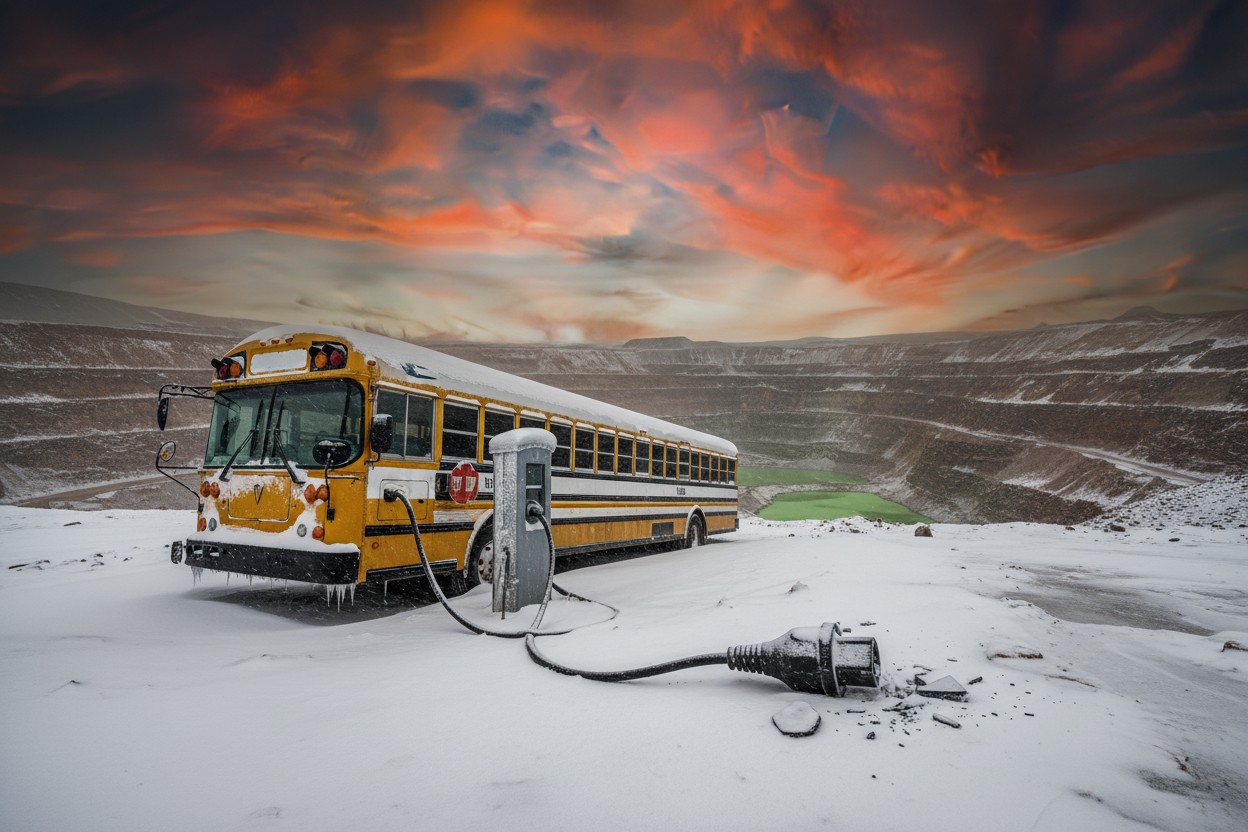
Existing electrical grids in many countries lack the capacity to handle widespread EV charging without major upgrades, officials said. The strain is already visible in real-world deployments. In Vermont, electric buses operated by Green Mountain Transit proved unreliable during winter, as charging required temperatures above 41 degrees Fahrenheit and battery recalls made garage charging a fire hazard. [4] A spokesman for the energy workers advocacy group Power the Future, Larry Behrens, said, “Taxpayers were sold an $8 million ‘solution’ that can’t operate in cold weather when the home for these buses is in New England.” [4]
The report also notes that increasing electricity generation to power EVs could strain both fossil fuel and renewable sources. Alex Epstein’s research, cited in Marc Morano’s book “Green Fraud,” found that energy poverty in the United States is exacerbated by mandates for solar and wind power. “25 million US households say they’ve gone without food or medicine to pay for energy,” Epstein wrote. [5] Additionally, safety concerns have been raised about EV batteries. Mike Adams, in the Health Ranger Report, described electric vehicles as “ticking time bombs of fire and destruction,” citing incidents of Teslas catching fire at airports and explosions at battery factories. [6]
Humanitarian and Environmental Costs Documented
The push for EV manufacturing has been linked to humanitarian and environmental problems. According to the book “Green Fraud” by Marc Morano, federal mandates for renewable energy and EVs have contributed to rising energy costs that force low-income households to choose between food and medicine. [5] The energy transition is escalating costs across the board, as Jason Isaac, CEO of the American Energy Institute, described it as “a campaign-driven initiative aimed at appeasing the leftist donor base.” [7]
Environmental damage from lithium and cobalt mining has also been documented. The Trends Journal noted that electric vehicles depend on “toxic materials and costly environmental mining for lithium.” [2] In Europe, the impact of EV mandates on the auto industry has been severe. Lance D. Johnson reported that “Europe’s Electric Vehicle Mandates Are Killing Their Auto Industry, and China Is Taking Advantage,” as forced targets have depressed sales and led to job cuts. [8] Ford Motor announced layoffs of about 4,000 workers in Europe, blaming the weak EV market and competition from China. [2]
Meeting Targets Requires Solutions
The report concludes that achieving EV mandates will depend on addressing supply chain, grid, and ethical challenges. Policymakers, industry leaders, and international organizations are urged to collaborate on practical solutions, according to the findings.
Some governments are already stepping back. In May 2025, the U.S. House of Representatives passed a resolution to overturn EPA waivers allowing California to ban gasoline-powered cars by 2035. [9] Critics of the EV mandate argue that it ignores grid instability, high costs, and environmental harms from battery production. [9] Meanwhile, Chinese firms like BYD are moving to shape international quality standards for EVs, gaining influence through membership in the International Automotive Task Force. [10] The future of global EV mandates remains uncertain as mineral, energy, and humanitarian barriers persist.
References
- “Is Climate Change Really the No. 1 Threat to”. Mercola.com. April 7, 2023.
- “Trends-Journal-2024-11-26”.
- Willow Tohi. “China’s Sodium Battery Revolution Sparks Global EV Rivalries and Resets Market Rules”. NaturalNews.com. May 14, 2025.
- “Out Cold: Vermont’s electric-powered buses prove unreliable for transportation this winter”. Just The News. February 7, 2026.
- Marc Morano. “Green Fraud Why the Green New Deal Is Even Worse than You”.
- Mike Adams. “Health Ranger Report – The problem with EVs”. Brighteon.com. September 29, 2023.
- Mike Adams. “Brighteon Broadcast News – Full Transportation Infrastructure Under Attack”. Brighteon.com. March 21, 2024.
- Lance D. Johnson. “Europe’s Electric Vehicle Mandates Are Killing Their Auto Industry, and China Is Taking Advantage”. NaturalNews.com. June 28, 2025.
- Cassie B. “House Votes to Block California’s Gas Car Ban as Green Policies Face Backlash”. NaturalNews.com. May 2, 2025.
- “Rulemaker status: BYD joins elite IATF body to help shape international EV rules”. CarNewsChina.com. March 11, 2026.
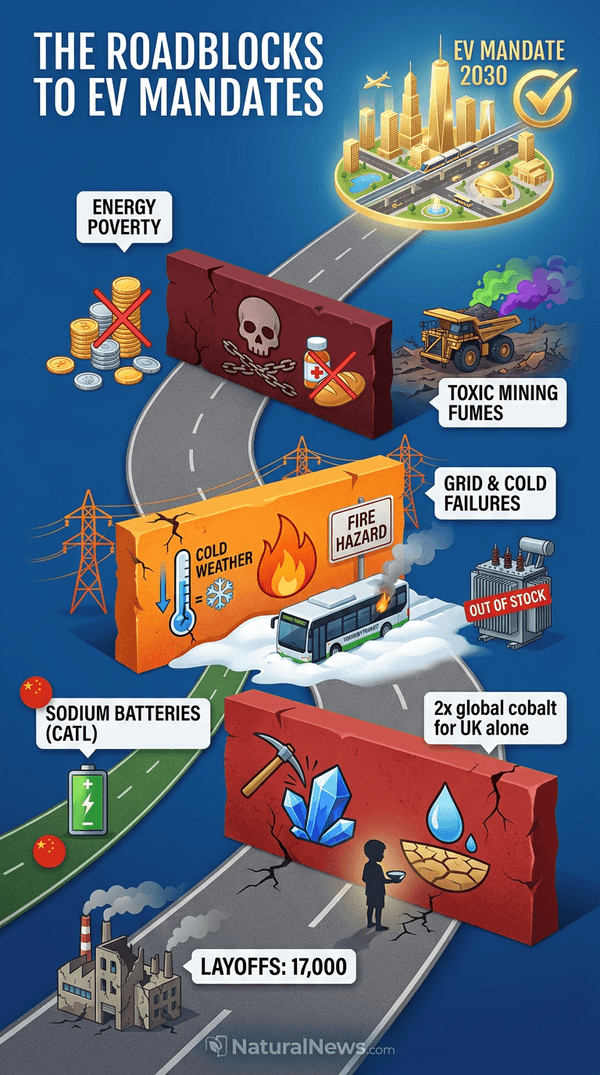
Explainer Infographic:
Submit a correction >>
Tagged Under:
climate, electric vehicles, electricity, energy infrastructure, energy supply, environment, EV, EV batteries, green living, Green New Deal, green tyranny, grid capacity, humanitarian, Mineral Supply, mining, power, power grid, supply chain
This article may contain statements that reflect the opinion of the author
RECENT NEWS & ARTICLES